Histamine Relief Protocol

Understand the symptoms, the science, and the step-by-step strategies to stabilize histamine and find relief.

What Is Histamine Intolerance?

Think of histamine as one of your body's "alert signals": helpful in normal amounts, problematic when it builds up.

Histamine is a chemical messenger that tells your immune system, stomach, and even your brain when something needs attention. It is involved in many essential processes, including:
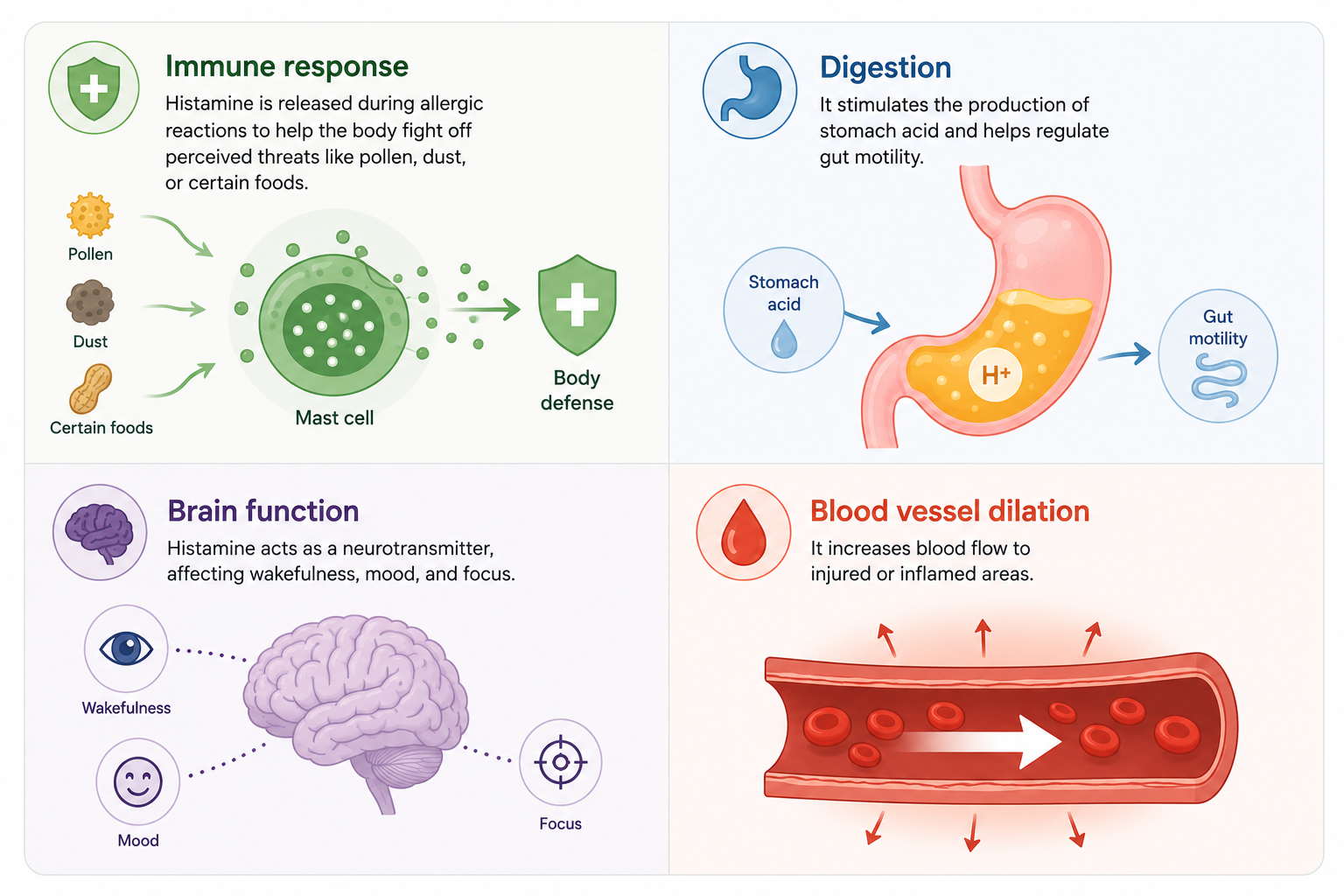
Key functions of histamine: immune response, digestion, brain function, blood vessel dilation

In normal amounts, histamine is helpful and necessary. The issue arises when histamine levels build up faster than the body can break it down. This is called histamine intolerance, and it can cause a wide range of symptoms, from allergy-like reactions to digestive problems.

Studies suggest that around 30–55% of people with IBS also struggle with histamine-related issues. Research has found higher histamine levels in the intestines of those with IBS, especially IBS-D (diarrhea-predominant). For many people, what feels like "just IBS" may actually involve histamine intolerance contributing to bloating, cramping, and unpredictable food reactions.
Meet Your Mast Cells

The histamine 'factories' standing guard throughout your body.

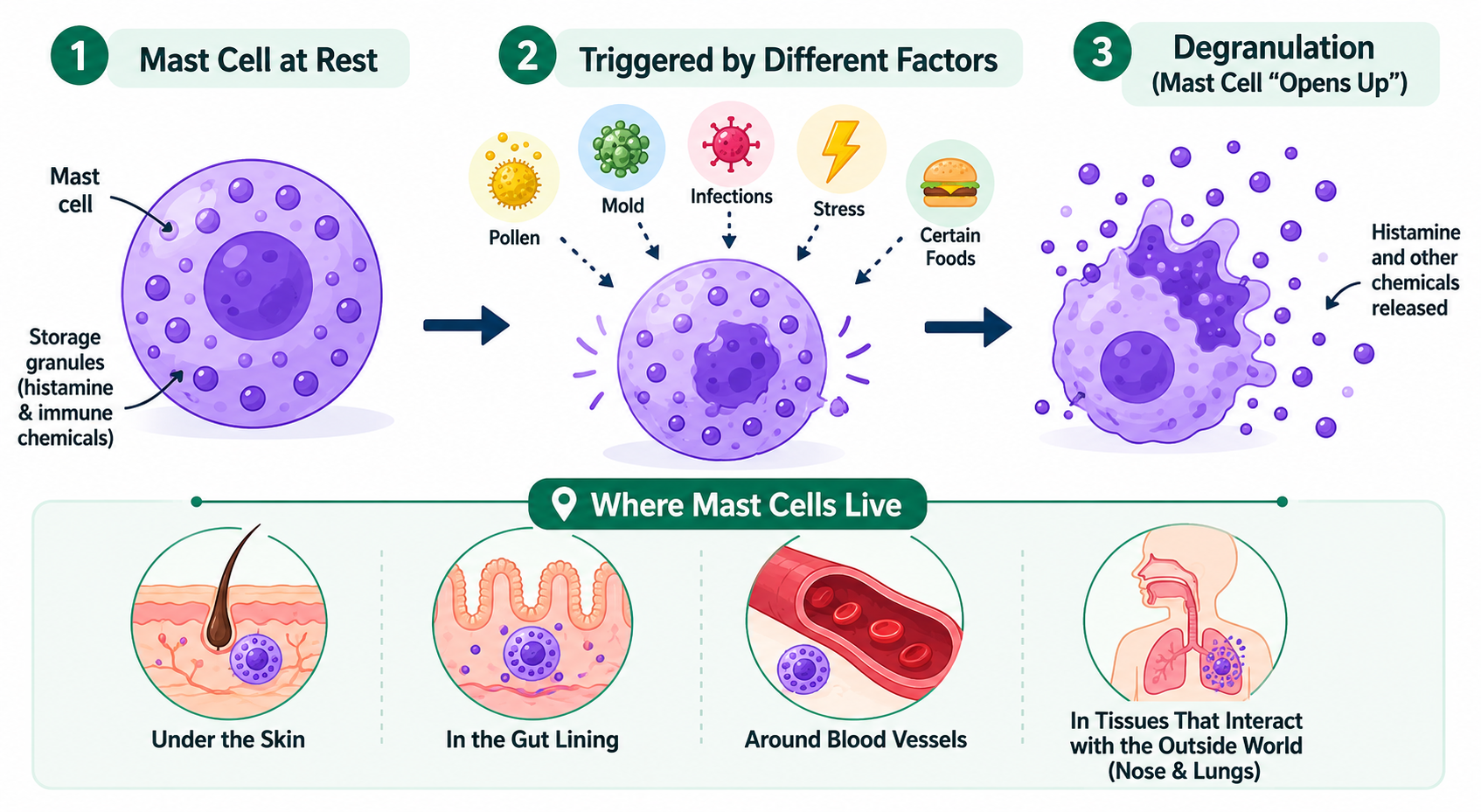
Histamine mostly lives inside immune cells called mast cells. Picture mast cells as little "storage units" that hold histamine and other immune chemicals until they're needed.

You'll find them sitting right under the surface of your skin, in your gut lining, around blood vessels, and in the tissues that interact with the outside world (like your nose and lungs).

When mast cells sense danger – whether it's pollen, mold, stress, infections, or even certain foods – they degranulate or "open up" and dump histamine into the surrounding tissues. That flood of histamine is what causes allergy-like symptoms such as a runny nose, sneezing, itchy eyes, or even hives.

Diagram showing mast cell degranulation triggered by pollen, mold, infections, stress, and certain foods, and where mast cells live in the body

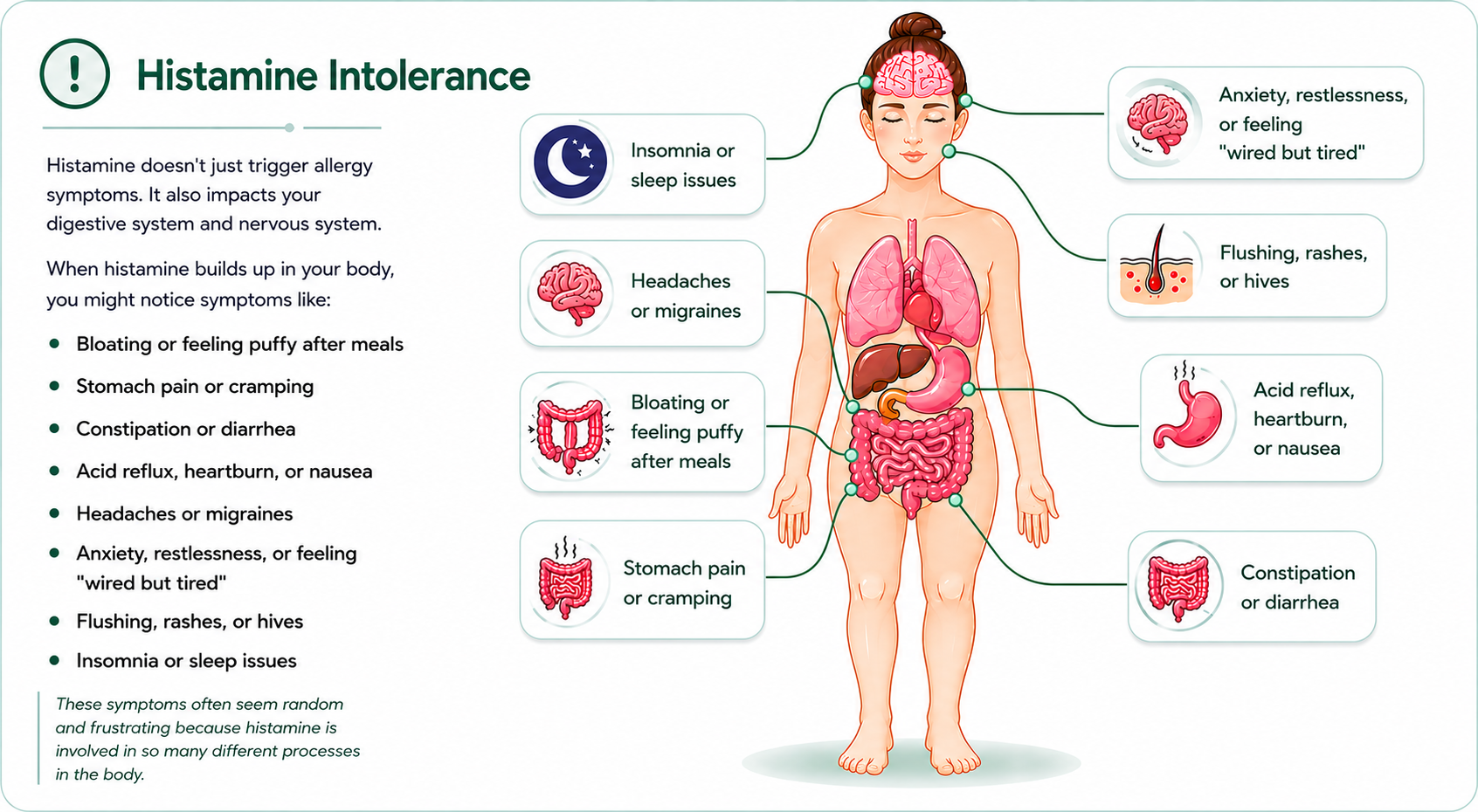
Signs of Histamine Intolerance

Signs of histamine intolerance: bloating, stomach pain, constipation or diarrhea, acid reflux, headaches, anxiety, and flushing or hives.

How Histamine Builds Up

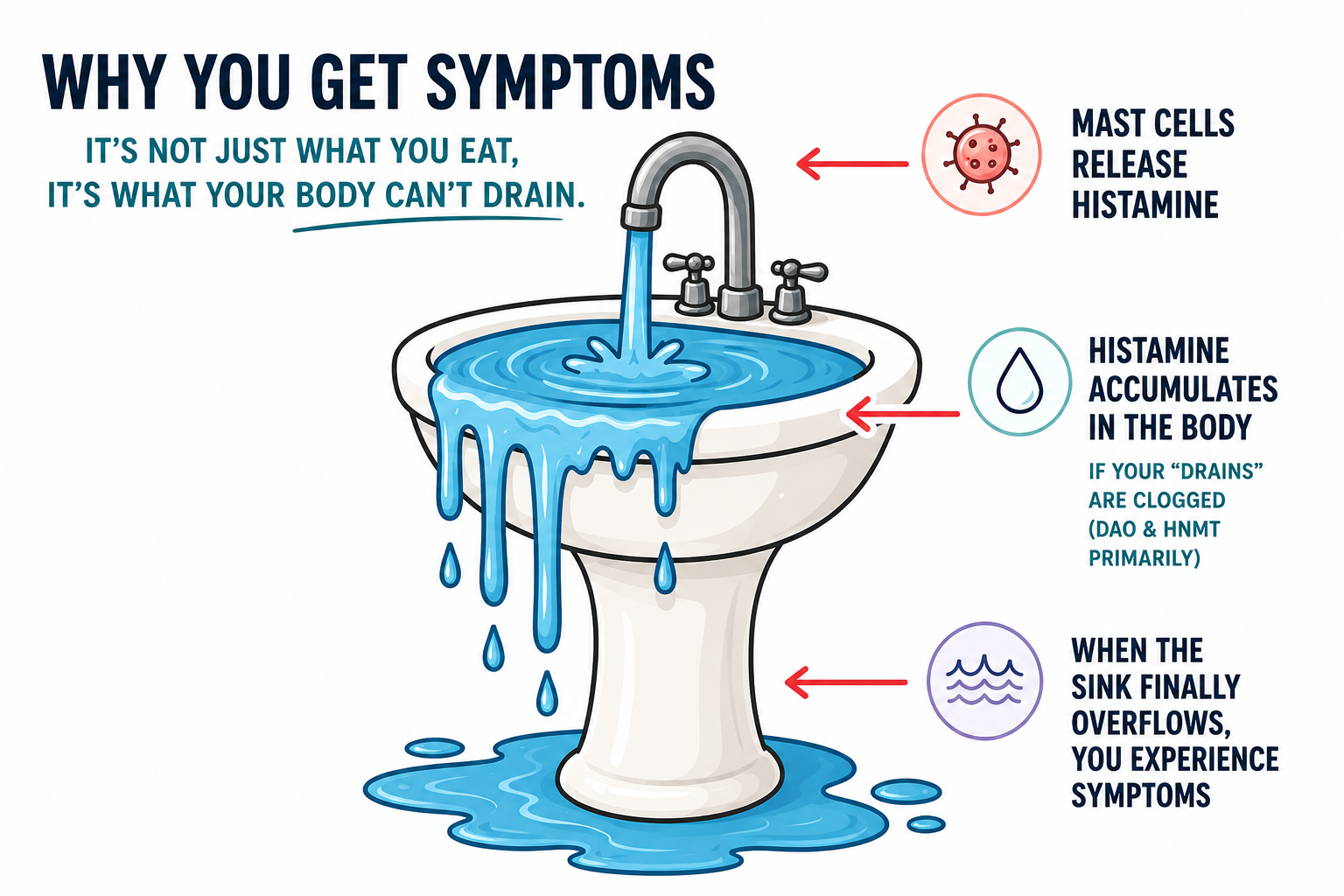
To make this easier to picture, imagine your body's histamine system as a sink:

The faucet is your mast cellswhen they're triggered, histamine starts pouring out like water.
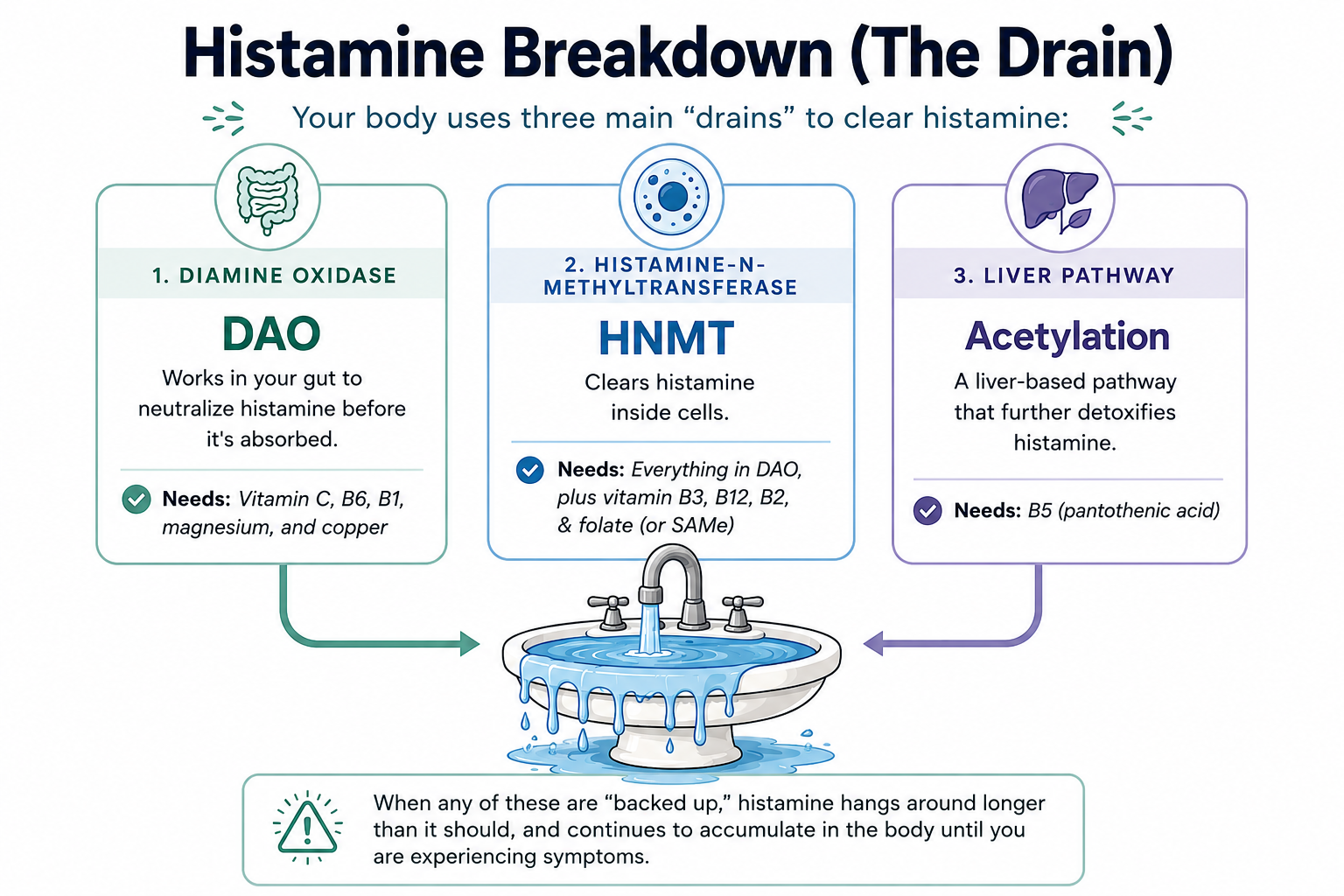
The drain is your body's histamine breakdown systemenzymes like DAO, HNMT, and acetylation pathways work to "drain" histamine out so it doesn't overflow.

When your faucet is running too high (mast cells are constantly releasing histamine) or your drain is clogged (your breakdown pathways aren't keeping up), the sink fills and eventually spills over. That "overflow" is when symptoms like bloating, headaches, or flushing show up.

Sink analogy: mast cells release histamine, DAO and HNMT drain it, overflow causes symptoms.

Why Does Histamine Build Up?

Several things can fill your sink faster than your body can drain it:

Mast cell activationStress, allergies, infections, or chronic inflammation can keep your mast cells "on high alert."
Gut imbalancesSome bacteria, fungi, or parasites actually make histamine or trigger your immune system to release more.
Sluggish breakdown pathwaysGenetic factors, nutrient deficiencies, gut damage, or certain medications (like NSAIDs, antibiotics, or alcohol) can slow down enzymes like DAO and HNMT.
Histamine-rich foodsAged, fermented, or leftover foods tend to be naturally high in histamine.
Histamine-liberating foodsThings like strawberries, shellfish, or citrus don't contain much histamine but can "poke" your mast cells and cause them to release it.
Histamine Breakdown (The Drain): DAO, HNMT, and Acetylation pathways.

Top Tools for Histamine Relief

Layer multiple strategies to stabilize mast cells, reduce build-up, and improve symptoms.

If you can relate to any of the symptoms above, you may consider implementing the following strategies. It's very common for people with histamine intolerance to need to layer multiple strategies in order to see significant improvements. You'll typically experience best results incorporating 2–3 histamine reducing supplements, along with a low histamine diet.

Step 1

Incorporate a 2–4 Week Trial of a Low Histamine Diet

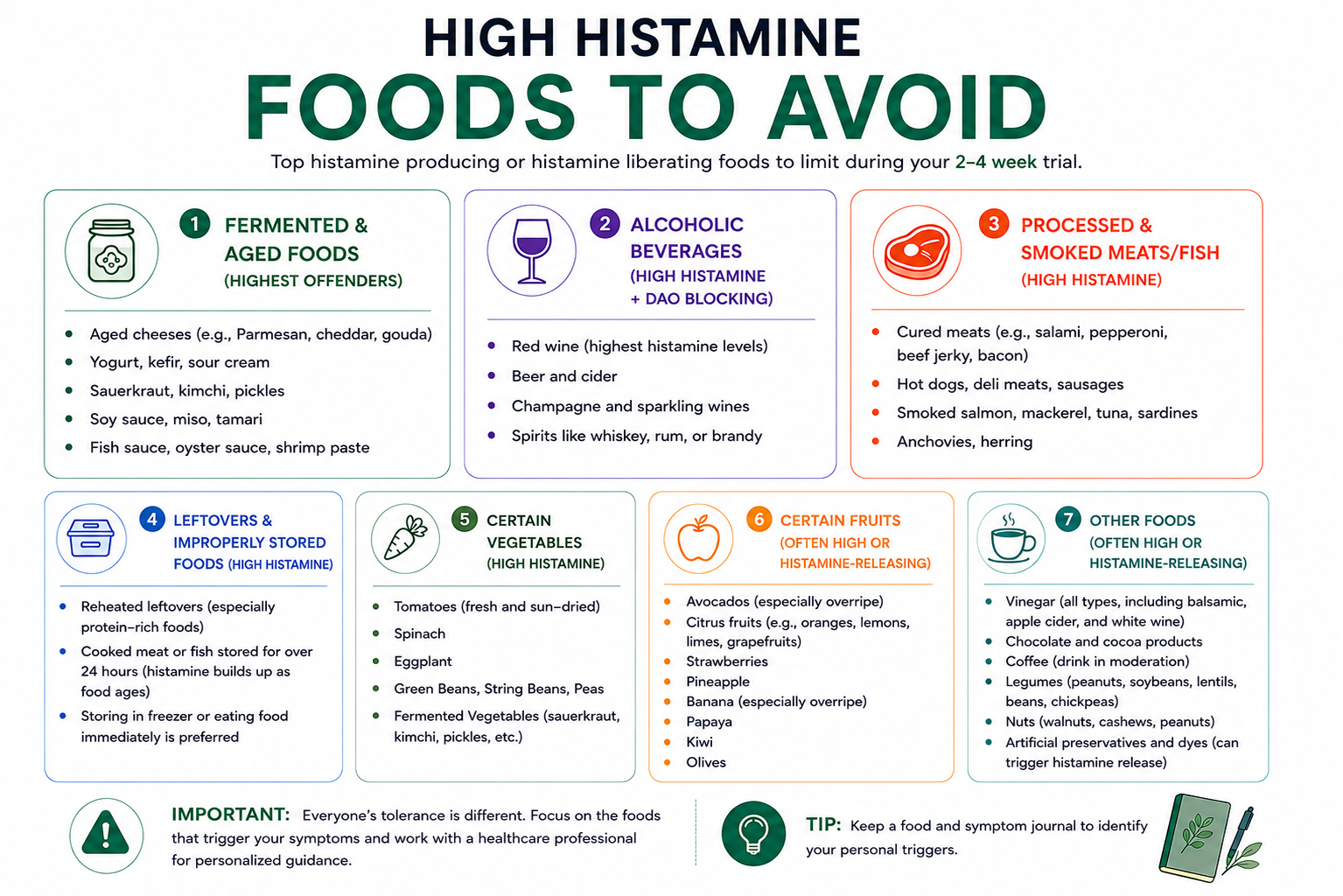
Below you'll find a list of high histamine containing, or histamine liberating foods that you want to limit/avoid for the next 2–4 weeks.

High histamine foods to avoid infographic

Just remember, it's nearly impossible to be 100% histamine-free, so don't stress about being perfect. Just aim to remove the biggest offenders and see if it makes a meaningful difference with your symptoms.

Step 2

Consider incorporating 1 product from each category

You can implement the pharmaceutical options if you need quick relief or natural supplements aren't helping enough.

Recommended Stack

Histamine Clearance: (break down / eliminate histamine)

HistaHarmony DAO

1 tablet, 1–4x daily (before meals)

Histamine Nutrients

2 capsules, 1–2x daily (with or without food)

Liposomal Vitamin C

1000 mg, 1–2x daily (with or without food)

Mast Cell Stabilizers: (prevent histamine release)

Quercetin Phytosome

500 mg, 1–2x daily (with or without food)

Stinging Nettle Tea

1–4 cups daily (with or without food)

Hist Reset

2 capsules, 1–2x daily (with or without food)

NeuroProtek

30 drops, 1–2x daily (with or without food)

Pharmaceutical Options: (symptom control / receptor blockade)

Zyrtec (cetirizine)

10 mg, 1–2x daily (with or without food)

Pepcid (famotidine)

10–20 mg, 1–2x daily (with or without food)

Ketotifen

0.25–1 mg at bedtime initially, then 1–2x daily as tolerated (with or without food)

Microdosed GLP-1s (Tirzepatide)

prescriber-directed; typically 10–25% of standard dose injected weekly (timing individualized)

Immune Regulation: (retrain the system upstream)

AuRx (Butyrate Powder)

1 scoop daily (with or without food)

ProBiota Bifidobacterium

1 capsule daily (with food)

High Histamine Foods

Top histamine producing or histamine liberating foods to limit during your 2–4 week trial.

Fermented & Aged Foods (Highest Offenders)

  • Aged cheeses (e.g., Parmesan, cheddar, gouda)
  • Yogurt, kefir, sour cream
  • Sauerkraut, kimchi, pickles
  • Soy sauce, miso, tamari
  • Fish sauce, oyster sauce, shrimp paste

Alcoholic Beverages (High Histamine + DAO Blocking)

  • Red wine (highest histamine levels)
  • Beer and cider
  • Champagne and sparkling wines
  • Spirits like whiskey, rum, or brandy

Processed & Smoked Meats/Fish (High Histamine)

  • Cured meats (e.g., salami, pepperoni, beef jerky, bacon)
  • Hot dogs, deli meats, sausages
  • Smoked salmon, mackerel, tuna, sardines
  • Anchovies, herring

Leftovers & Improperly Stored Foods (High Histamine)

  • Reheated leftovers (especially protein-rich foods)
  • Cooked meat or fish stored for over 24 hours (histamine builds up as food ages)
  • Storing in freezer or eating food immediately is preferred

Certain Vegetables (High Histamine)

  • Tomatoes (fresh and sun-dried)
  • Spinach
  • Eggplant
  • Green Beans, String Beans, Peas
  • Fermented Vegetables (sauerkraut, kimchi, pickles, etc.)

Certain Fruits (Often High or Histamine-Releasing)

  • Avocados (especially overripe)
  • Citrus fruits (e.g., oranges, lemons, limes, grapefruits)
  • Strawberries
  • Pineapple
  • Banana (especially overripe)
  • Papaya
  • Kiwi
  • Olives

Other Foods (Often High or Histamine-Releasing)

  • Vinegar (all types, including balsamic, apple cider, and white wine)
  • Chocolate and cocoa products
  • Coffee (drink in moderation)
  • Legumes (peanuts, soybeans, lentils, beans, chickpeas)
  • Nuts (walnuts, cashews, peanuts)
  • Artificial preservatives and dyes (can trigger histamine release)
Always work with a qualified practitioner for personalized guidance, especially if you have existing GI conditions or suspect Mast Cell Activation Syndrome.